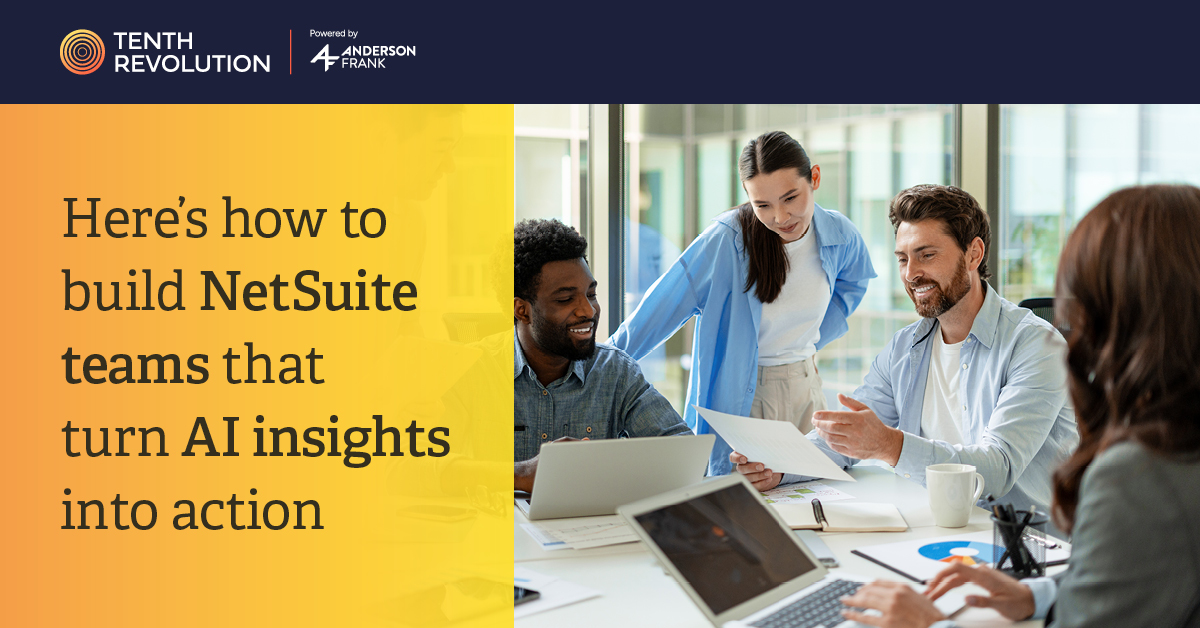
AI features in NetSuite only create value when teams know how to interpret and apply what the system produces.
Many organizations now use AI-driven insights across forecasting, demand planning, anomaly detection, and reporting. These tools surface patterns faster than any manual process. The challenge is no longer access to insight. The challenge is whether teams can act on it with confidence and consistency. This has changed what strong NetSuite teams look like and how leaders should hire for them.
Why AI insight alone does not change outcomes
AI tools highlight trends, risks, and exceptions. They do not decide what to do next. That responsibility still sits with people. Someone must validate the data, understand the business context, and decide whether a recommendation fits current priorities.
In NetSuite environments, this often spans multiple functions. A forecast alert affects finance. A demand signal affects the supply chain. A revenue anomaly touches billing and reporting. Teams without shared understanding struggle to act, even when insights are accurate.
This is why AI-ready NetSuite teams focus less on technical depth alone and more on analytics awareness, judgment, and cross-functional communication.
When teams feel overwhelmed by these changes, Anderson Frank delivers NetSuite professionals who understand how AI outputs connect to finance, operations, and reporting decisions.
What action-ready NetSuite talent looks like
Action-ready talent does not treat AI as a black box. They ask where the data comes from. They know which fields drive the output. They understand how timing, volume, or process changes affect results.
These professionals usually show several shared traits:
- Comfort working with reports and analytics
- Awareness of how data flows across modules
- Ability to explain insights to non-technical teams
- Confidence questioning results when context does not align
- Willingness to adjust processes based on evidence
This mix allows teams to move from insight to execution without long delays or repeated escalations.
How hiring profiles are changing
Traditional NetSuite roles often focused on configuration or support tickets. AI-infused environments demand more. Teams now look for people who can sit between the system and the business, interpret what the platform reveals, and guide the next step.
This shift appears across roles in finance systems, operations, and analytics. Hiring managers ask about experience validating reports, working with forecasting tools, and explaining data to stakeholders. They want proof that candidates can translate insight into action.
The Anderson Frank Careers and Hiring Guide shows that 57% of hiring managers struggle to find NetSuite talent with the right industry context. AI increases that pressure because context matters more when decisions rely on data-driven signals.
Why cross-functional understanding matters more with AI
AI outputs rarely map cleanly to one team. A recommendation may make sense for finance but cause friction in operations. A change that improves forecast accuracy may disrupt supply planning. Teams need people who understand these trade-offs.
Cross-functional NetSuite talent helps teams resolve this tension. They weigh impact across departments. They coordinate changes. They help teams agree on priorities before action is taken. This prevents AI-driven decisions from creating unintended consequences.
When internal teams lack this capability, Anderson Frank delivers NetSuite professionals who support analysis, testing, and communication so decisions move forward with clarity.
How leaders should structure AI-ready teams
Leaders do not need large AI teams. They need clear roles and shared accountability. A small group that understands analytics, business rules, and decision rights often performs better than a larger group with unclear ownership.
Strong structures usually include:
- Clear ownership of data quality
- Defined responsibility for insight review
- Regular checkpoints to assess impact
- Agreed thresholds for action
- Shared documentation of decisions
This structure helps teams trust AI outputs and respond consistently.
How to assess candidates for AI readiness
AI-ready candidates explain how they use data in decisions. They describe how they validated an insight, what questions they asked, and how they chose an action. They connect system outputs to business results.
Useful interview prompts include:
- Tell me about a time you challenged a report
- Explain how you validated a forecast
- Describe a decision driven by analytics
- Share how you explained data to a non-technical team
- Walk me through a process change you supported
These questions reveal whether a candidate can move from insight to execution.
What this means for future NetSuite hiring
AI will continue to expand across NetSuite. Insights will become faster and more detailed. Teams that succeed will not be the ones with the most dashboards. They will be the ones with people who know how to interpret results, align teams, and act with confidence.
Building these teams requires a shift in hiring priorities. Analytics literacy, judgment, and communication now matter as much as configuration skills. Organizations that hire with this balance in mind will extract far more value from AI investments.